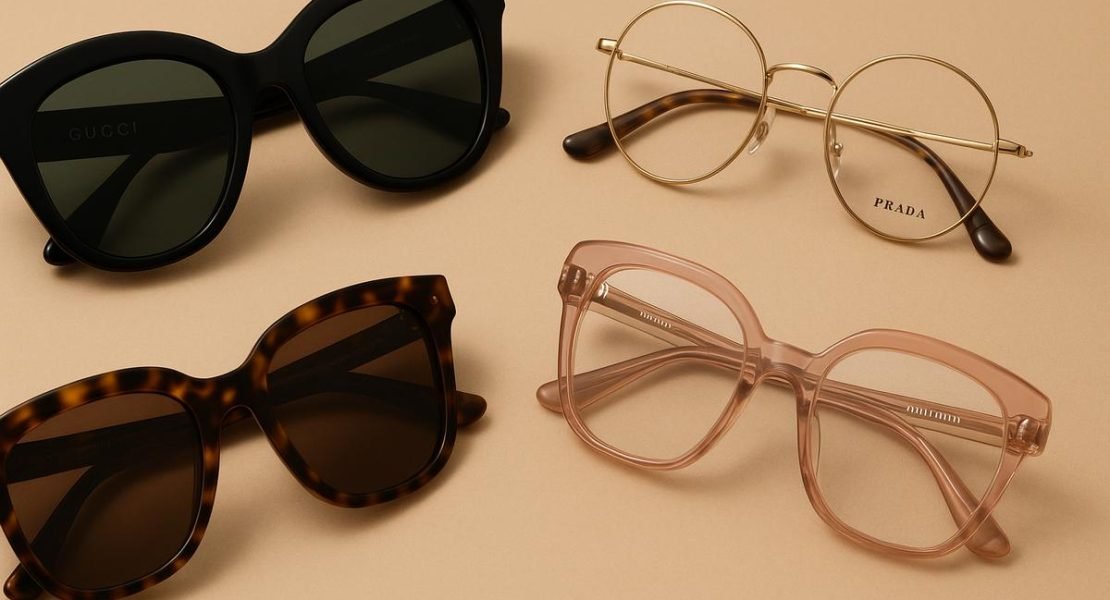
A pair of sunglasses that only darkens the world can be worse for your eyes than wearing nothing at all. In bright light your pupils contract. Put a dark lens in front of them with no UV filter and the pupils open up again — now more ultraviolet light reaches the retina, not less. This is why the sticker matters more than the shade of the lens.
UV400 — the one that is non-negotiable
UV400 means the lens blocks light up to a wavelength of 400 nanometres, which covers effectively all UVA and UVB. This is the protective part. It has nothing to do with how dark the lens is: a very light brown UV400 lens protects better than a pitch-black lens with no UV coating.
Long-term UV exposure is linked to cataract, pterygium (the fleshy growth on the white of the eye that is very common in our region) and damage to the skin around the eyelids. In Sri Ganganagar, with the kind of summer glare we get from April onwards, this is not a theoretical concern.
Polarised — for glare, not for protection
Polarised lenses have a filter that blocks light waves bouncing off flat surfaces — road tarmac, water, a car bonnet, glass. That reflected light is what makes you squint while driving at noon.
Polarisation is a comfort and clarity feature. It is excellent for driving, riding, being near water and long hours outdoors. It does not by itself provide UV protection, which is why you want a lens that is both polarised and UV400.
One caveat: polarised lenses can make some LCD screens — a few car dashboards, some phone displays — look dim or patchy at certain angles. If that bothers you, a good UV400 tinted lens is the alternative.
Tint colour — mostly preference, partly function
- Grey: keeps colours looking natural. The safest all-purpose choice, good for driving.
- Brown and amber: increase contrast and depth perception. Useful in hazy or variable light, popular for driving and outdoor sport.
- Green: a balance of the two, easy on the eyes for long wear.
- Yellow: boosts contrast in low light and fog. Not for bright sun.
- Mirror coating: reflects extra light away from the lens. Helpful at high altitude or near water. Cosmetic otherwise.
Gradient lenses
Darker at the top, lighter at the bottom. They cut overhead sun while letting you see your phone, a dashboard or a menu without lifting the glasses. A sensible choice for city use.
Fit still matters
Light that comes in from the sides and top defeats the purpose. Wrap frames and larger shapes cover more; small round frames leave a lot of gap. If you spend long stretches outdoors, size up.
Can I get power in my sunglasses?
Yes. Most of the frames we stock can take prescription sun lenses, including progressives. If you would rather not carry two pairs, photochromic lenses — clear indoors, dark outdoors — are the other option worth asking about.
What to check before you pay
- Does it say UV400 or 100% UV protection? If nobody can tell you, do not buy it.
- Do the temples sit level and comfortably behind your ears?
- Is the lens optically clean — no distortion when you look through it and move your head?
Bring your current pair along and we will check the UV filter on our meter. Roop Eye Care, 6, Ravindra Path, B Block, Sri Ganganagar. Open daily, 9:30 AM to 9:30 PM.